Poster Presentation RACI Biomolecular Division Conference 2013
Quinazoline Sulfonamides as Dual Binders of the Proteins Bcl-2 and Bcl-xL with Potent Pro-apoptotic Cell-Based Activity (#89)
Apoptosis is the hallmark of cell death. A key component of cell death is the interplay between pro-apoptotic (bad, bim, bik, bmf, noxa) and anti-apoptotic proteins (Bcl-xL, Bcl-2, Bcl-w, Mcl-1, A1). In many cancerous cells anti-apoptotic proteins are over expressed preventing cell death. Small-molecule mimetics of BH3-only proteins neutralize the pro-survival proteins present, allowing the release of Bax/Bak and ensuing apoptosis via p53 activation.
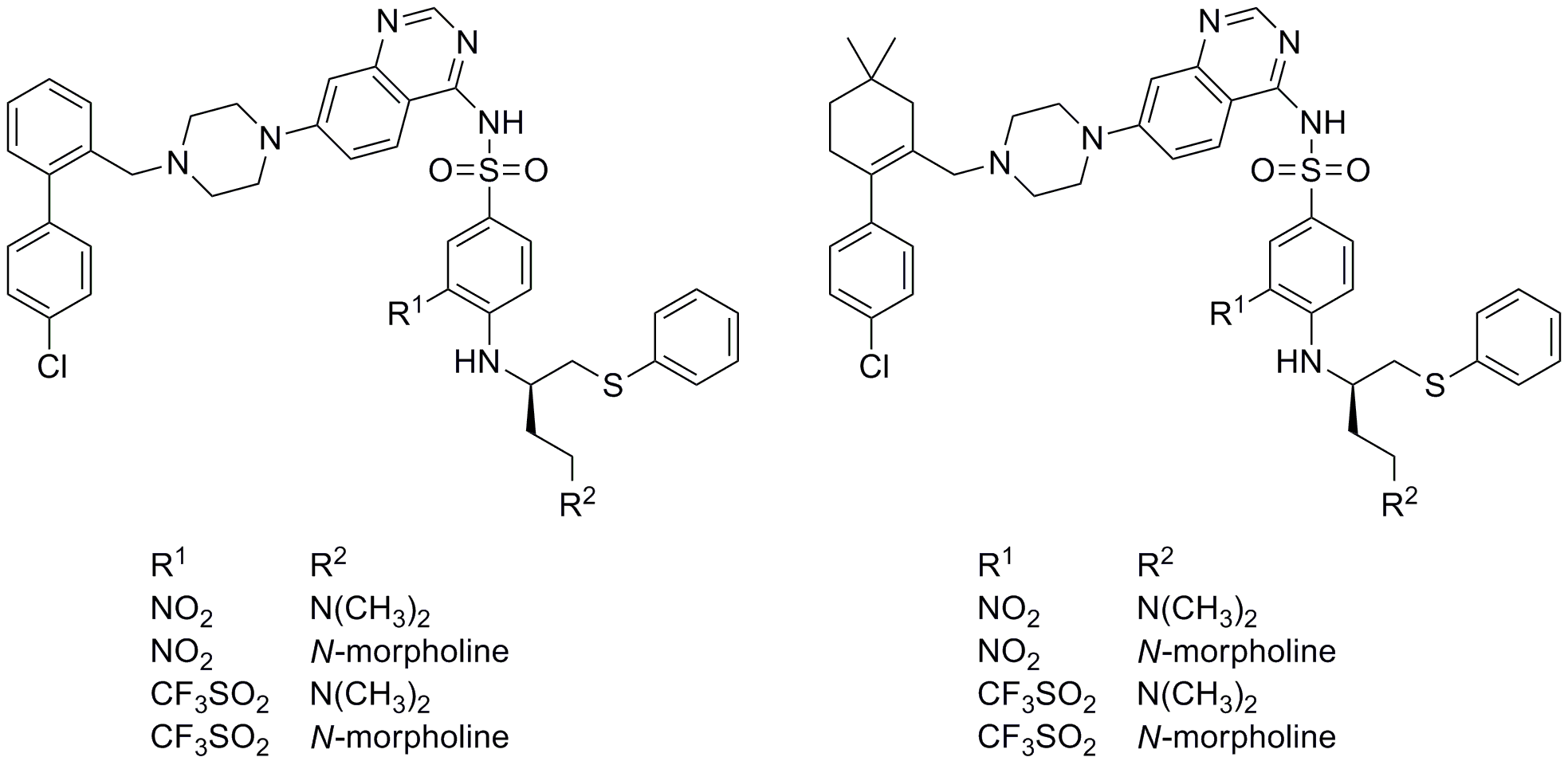
BH3 mimetics such as, ABT-7371 and ABT-263,2 are both potent inhibitors of the BH3 anti-apoptotic proteins, Bcl-w, Bcl-xL and Bcl-2. A feature of these drugs is the presence of an acylsulfonamide moiety which represents a potential metabolic liability. To overcome this potential liability, a series of novel quinazoline sulfonamides were designed and synthesized that contain a heterocyclic alternative to the acylsulfonamide.
The quinazoline sulfonamides exhibit low nanomolar affinities for Bcl-2 and Bcl-xL, and no affinity for Mcl-1, however differ from ABT-263 and ABT-737 in that they have reduced affinity for Bcl-w. X-ray crystallographic analysis of a quinazoline in complex with Bcl-xL, suggests a possible hypothesis for this difference. The quinazolines demonstrate potent and mechanism-based activity in a MEF cell line where Mcl-1 has been genetically deleted. They also exhibit submicromolar activity against a panel of small-cell lung carcinoma cell lines in the presence of 10% human serum.3
- Oltersdorf, T.; et al. Nature 2005, 435, 677–681.
- Park, C.M.; et al. J. Med. Chem. 2008, 51, 6902–6915.
- Sleebs, B.E.; et al. J. Med. Chem. 2011, 54, 1914–1926.