Poster Presentation RACI Biomolecular Division Conference 2013
Iron promoted Allylic Amination of Unactivated Alkenes (#69)
Allylic amination of alkenes is an important and attractive route to functionalized amines through C–N bond formation which may be promoted by transition metal catalysis. 12
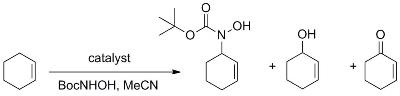
Scheme 1: Allylic amination of cyclohexene
In this study, Iron(II) , copper(II) and manganese(II) complexes of tris-(2-pyridylmethyl)-amine (TPA, 1), N,N ̍-bis(2-pyridylmethyl)-N,N ̍-dimethyl-1,2-ethylenediamine (BPMEN, 2), lithium (S)-1-((6-(hydroxymethyl)pyridine-2-yl)methyl)pyrrolidine-2-carboxylate (3) lithium (2S,2S̍-1,1̍-(pyridine-2,6-diylbis(methylene))dipyrrolidine-2-carboxylate (4) and iron(II) complexes of the bridged cyclam ligand (5), tetramethyl cyclam (TMCy, 6), tris-(2-dimethylaminoethyl)amine (Me6-TREN, 7) and N,N’-bis(2’-(dimethylamino)ethyl)- N,N’-dimethylpropane-1,3-diamine (8) have been trialled as catalysts to achieve the allylic amination of cyclohexene. Several of these complexes have proven effective catalysts for the allylic hydroxyamination reaction (Scheme 1). Among them FeTPA was found to be optimal producing moderate yields using N-Boc-hydroxylamine (BocNHOH) in acetonitrile at room temperature. The generality of this reaction has been studied using a series of hydroxylamines and alkene substrates.
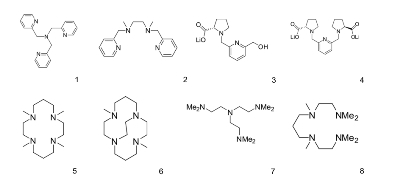
Figure 1: Amine ligands used for allylic amination
- Paradine, S. M.; White, M. C. J. Am. Chem. Soc. 2012, 134, 2036__2039.
- Frazier, C. P.; Engelking, J. R.; Read De Alaniz, J. J. Am. Chem. Soc. 2011, 133, 10430__10433.