Oral Presentation RACI Biomolecular Division Conference 2013
Identification of an antifungal inhibitor of the riboflavin synthesis pathway by in silico screening (#28)
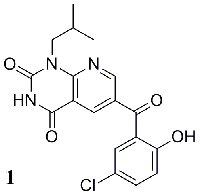
All organisms require riboflavin (vitamin B2) as it is a precursor to cofactors present in flavoproteins. The riboflavin biosynthetic pathway is an attractive drug target in human pathogens. Unlike animals, which obtain the riboflavin from dietary sources, fungi, plants and bacteria must synthesize riboflavin. Bioinformatics analysis identified lumazine synthase (LS) within the riboflavin biosynthesis pathway as a potential target for antifungal intervention. In silico screening utilizing 2D filtering around a substrate-based cyclic imide reduced an initial database of 5 million commercially available compounds to 14000. Subsequent docking, followed by consensus scoring and visualisation reduced this number to approximately 40 compounds to screen for antifungal activity. Seventeen compounds were tested on the model yeast Saccharomyces cerevisiae, where compound 1 showed significant antifungal activity. Compound 1, and a related compound were tested for their activity against LS to confirm this was indeed the molecular target. Lumazine synthase from the fungal pathogen Candida glabrata was expressed in Escherichia coli to test potential hits and for use in structural analysis. Compound 1 gave an IC50 2.3 µM against purified C. glabrata LS. Structural analyses did not identify any protein-inhibitor complexes. Instead, a complex of the protein and its catalytic product was obtained at a resolution of 2.24 Å. Our results encourage further investigation of a new class of antifungal agent.