Oral Presentation RACI Biomolecular Division Conference 2013
Transition state mimetic inhibitors of Plasmepsin V from Plasmodium falciparum and Plasmodium vivax (#45)
Malaria parasites survive inside human red blood cells by renovating them. This is achieved by exporting hundreds of proteins into the erythrocyte to remodel it. The 450 exported proteins traffic through the parasite Endoplasmic Reticulum (ER) and possess an N-terminal export motif, termed the Plasmodium export element (PEXEL), which targets the proteins to the erythrocyte. In order for proteins to be correctly exported, the PEXEL motif (RxLxQ/E/D) must be cleaved by an ER-resident aspartic acid protease called Plasmepsin V (PMV).1,2 If cleavage does not take place, proteins accumulate inside the parasite and are not exported. Plasmepsin V is conserved in all Plasmodium spp., including the most virulent human parasites P. falciparum and P. vivax, and is essential for blood-stage parasite survival. Plasmepsin V is therefore considered to be a prime target for therapeutic intervention of malaria.
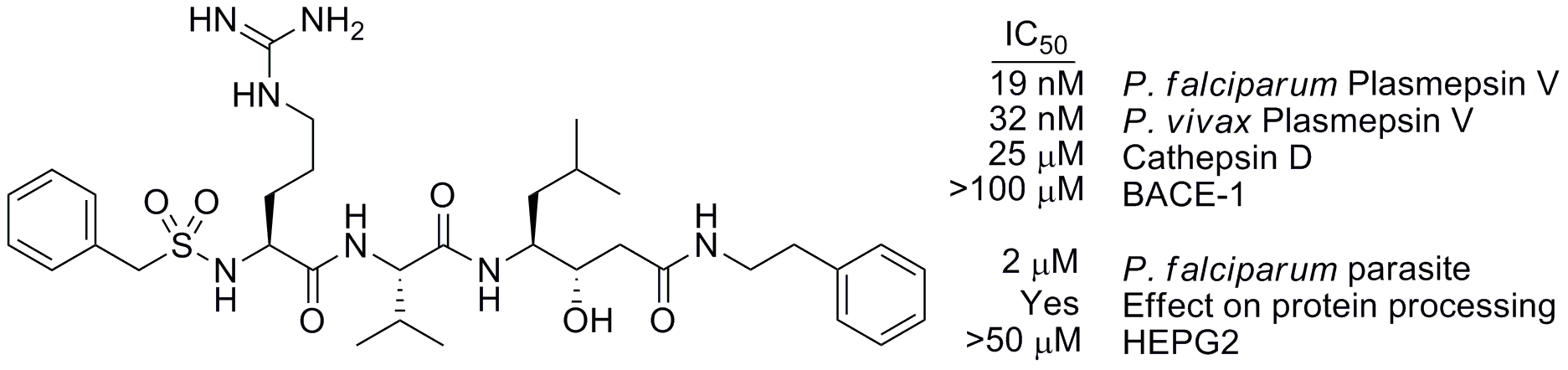
Presented is the design of transition state mimetics of the native PEXEL substrate, for use as chemical probes to study Plasmepsin V. The mimetics display potent inhibition of Plasmepsin V from both P. falciparum and P. vivax with negligible off target activity against human proteases (BACE-1 and Cathepsin D), and demonstrate the unique and exquisite specificity3 Plasmepsin V has for its native PEXEL substrate. For the first time we demonstrate that the treatment of P. falciparum parasites in culture with a small molecule mimetic causes a reduction in processing efficiency resulting in parasite death, reinforcing Plasmepsin V as a valid antimalarial target.
- Boddey, JA; Gilson, PR; Patsiouras, H.; Kapp, EA; Hodder, AN; Gu, S; Pearce, JA; Koning-ward, TFD; Simpson, RJ; Crabb, BS; Cowman, AF. Nature 2010, 463, 627
- 2. Russo, I; Babbitt, S; Muralidharan, V; Butler, T; Oksman, A; Goldberg, DE. Nature 2010, 463, 632.
- 3. Boddey, JA; Carvalho, TG; Hodder, AN; Sargeant, TJ.; Sleebs, BE; Marapana, D; Lopaticki, S; Nebl, T; Cowman, AF. Traffic (2013), DOI: 10.1111/tra.12053.